
TMJ Disorder: 6 Symptoms, Causes & Treatments That Actually Work
TMJ Disorder: 6 Symptoms, Causes & Treatments That Actually Work
TMJ disorder short for temporomandibular joint disorder, and often called TMD is one of those conditions that quietly affects an enormous number of people, many of whom have no idea their jaw pain, headaches, or clicking sound even has a name. If you’ve ever woken up with a sore jaw, heard a pop when you open your mouth wide, or dealt with headaches that seem to radiate from your temples, TMJ disorder is worth understanding.
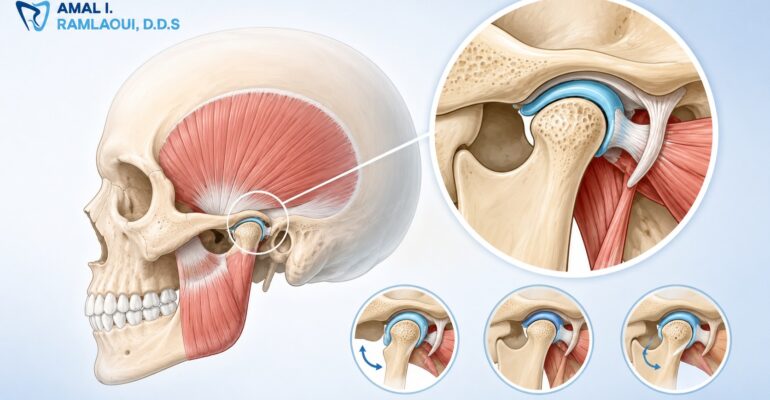
The temporomandibular joint connects your jawbone to your skull, and it’s one of the most frequently used joints in your body every time you chew, talk, yawn, or swallow, it’s at work. When something throws that joint or the surrounding muscles out of balance, the symptoms can range from a mild annoyance to genuinely debilitating pain.
Here’s a complete breakdown: the symptoms to watch for, what actually causes TMJ disorder, and the full range of treatments available today from simple at-home care to night guards to the increasingly popular option of therapeutic Botox. At Ramlaoui DDS in San Jose, we evaluate and treat TMJ disorder regularly, and this is one of the more satisfying conditions to help patients resolve, because relief is almost always achievable.
Table of Contents
- What Is TMJ Disorder?
- 6 Common Symptoms of TMJ Disorder
- What Causes TMJ Disorder?
- How Is TMJ Disorder Diagnosed?
- TMJ Disorder Treatment Options, What Actually Works
- Botox for TMJ: The Trending Treatment Explained
- At-Home Relief for TMJ Flare-Ups
- Frequently Asked Questions
What Is TMJ Disorder?
The temporomandibular joint (TMJ) is a sliding hinge that connects your lower jaw to your skull, located just in front of each ear. It’s a uniquely complex joint, it both hinges open and closed and slides forward and backward, all while being surrounded by a network of muscles, ligaments, and a small cushioning disc.
TMJ disorder (also called TMD) refers to any condition affecting this joint or the surrounding muscles, causing pain, restricted movement, or noise (clicking, popping, or grinding) when the jaw moves. It can stem from muscle tension, joint inflammation, structural issues with the disc inside the joint, or a combination of these.
💡 TMJ disorder is one of the most common and most under-diagnosed sources of chronic facial pain. Many people live with symptoms for years without realizing there’s a specific, treatable condition behind them.
6 Common Symptoms of TMJ Disorder
TMJ disorder shows up differently from person to person, but these are the most common signs:
1. Jaw Pain or Tenderness
A dull ache or sharp pain in the jaw, especially noticeable first thing in the morning or after extended talking or chewing, is one of the most common complaints. It’s often worse on one side than the other.
2. Clicking, Popping, or Grinding Sounds
A clicking or popping sound when opening or closing the mouth is extremely common with TMJ disorder. On its own, occasional clicking without pain isn’t necessarily concerning but when it’s accompanied by pain or limited movement, it’s worth evaluating.
3. Difficulty or Discomfort Chewing
Pain or fatigue while chewing, particularly with tougher foods, is a frequent symptom. Some patients unconsciously shift to chewing only on one side to avoid discomfort.
4. Jaw Locking
In more significant cases, the jaw can temporarily lock in an open or closed position. This can be alarming the first time it happens and is a clear sign that a proper evaluation is needed.
5. Headaches and Earaches
Because the TMJ sits so close to the ear and is surrounded by muscles that connect to the temples, TMJ disorder frequently causes headaches (often mistaken for tension headaches or migraines) as well as ear pain, ringing, or a feeling of fullness in the ear despite there being nothing wrong with the ear itself.
6. Facial Pain and Muscle Fatigue
A tired, sore feeling in the muscles of the face and jaw especially the masseter muscle at the corner of the jaw is common, particularly in patients whose TMJ disorder is linked to teeth grinding or clenching.
⚠️ Sudden jaw locking, severe pain, or an inability to close your mouth requires prompt evaluation — don’t wait for a routine appointment if this happens.
What Causes TMJ Disorder?
TMJ disorder rarely has a single cause. It’s usually the result of one or more contributing factors:
- Teeth grinding or clenching (bruxism) — the single most common contributor, placing repeated excess strain on the jaw joint and muscles, often during sleep
- Jaw injury or trauma — a direct blow to the jaw or face can damage the joint or surrounding structures
- Arthritis — osteoarthritis or rheumatoid arthritis can affect the TMJ just as it does other joints in the body
- Misaligned bite (malocclusion) — when the upper and lower teeth don’t meet properly, it can place uneven stress on the jaw joint
- Chronic stress — stress-related jaw clenching, even during waking hours, is a major and often overlooked contributor
- Poor posture — particularly forward head posture from prolonged phone or computer use, which changes the alignment of the jaw and neck muscles
- Connective tissue disorders — certain conditions that affect joint flexibility throughout the body can also involve the TMJ
For many patients, it’s a combination — chronic stress leading to nighttime grinding, compounded by a bite that isn’t quite aligned. Identifying the specific contributing factors is a key part of building an effective treatment plan.
How Is TMJ Disorder Diagnosed?
At Ramlaoui DDS, diagnosing TMJ disorder starts with a thorough conversation and hands-on evaluation:
- A review of your symptoms, including when they occur and what seems to trigger or worsen them
- A physical exam of the jaw joint, checking for clicking, popping, tenderness, and range of motion
- An evaluation of your bite and how your teeth come together
- A check for signs of teeth grinding — worn enamel, flattened tooth surfaces, or a visibly enlarged masseter muscle
- Imaging (X-rays or sometimes a CT/MRI) if structural joint issues are suspected
This evaluation helps determine whether the primary driver is muscular (most common), joint-related, or a combination which directly shapes the treatment recommendation.
TMJ Disorder Treatment Options, What Actually Works
The good news about TMJ disorder is that most cases respond well to conservative, non-invasive treatment. Surgery is a last resort, reserved for a small minority of structural cases. Here’s the full range of options:
| Treatment | What It Does | Best For |
| Night guard / splint | Cushions teeth and reduces clenching force overnight | First-line treatment for most bruxism-related TMJ cases |
| Physical therapy & jaw exercises | Improves jaw mobility and reduces muscle tension | Mild to moderate cases; often combined with other treatments |
| Warm/cold compresses & soft diet | Reduces inflammation and muscle strain during flare-ups | At-home management of acute symptoms |
| Anti-inflammatory medication | Reduces pain and swelling in the jaw joint | Short-term flare-up relief |
| Therapeutic Botox | Relaxes overactive jaw muscles for 3–4 months per treatment | Chronic bruxism/TMD unresponsive to night guards |
| Occlusal (bite) adjustment | Corrects a misaligned bite contributing to joint strain | Cases where bite misalignment is a root cause |
| Oral surgery | Repairs or replaces damaged joint structures | Rare, severe structural cases unresponsive to other care |
Most patients start with a custom night guard and lifestyle adjustments, and a large percentage see significant improvement without needing to progress further down this list. Treatment is almost always layered combining a night guard with stress management or physical therapy tends to outperform any single approach alone.
Botox for TMJ: The Trending Treatment Explained
Therapeutic Botox has become one of the fastest-growing treatments in dentistry for TMJ disorder and chronic bruxism, and for good reason it directly targets the overactive jaw muscles that cause much of the pain and grinding damage.
Botox (botulinum toxin) works by temporarily blocking the nerve signals that trigger muscle contraction. When injected into the masseter muscle the primary muscle used for chewing and clenching it reduces the force and frequency of grinding and clenching, easing both jaw pain and the wear on your teeth.
Who Is a Good Candidate?
Botox for TMJ is typically recommended for patients with chronic jaw clenching or bruxism, visibly enlarged masseter muscles, or TMJ-related headaches that haven’t improved with a night guard or other conservative treatments. It’s generally considered after not instead of first-line treatments like night guards.
What to Expect
The procedure itself is quick typically 10 to 15 minutes, with injections placed directly into the targeted jaw muscles. Most patients describe it as feeling similar to a series of small pinches. Results aren’t immediate; it typically takes 7 to 10 days to notice the full effect, and the relief generally lasts 3 to 4 months per treatment.
💡 Botox for TMJ is not covered by most dental insurance, though some medical insurance plans may provide partial coverage when documented as medically necessary after other treatments have been attempted.
🔗 Cleveland Clinic — Botox for TMJ Pain: What to Expect →
It’s worth noting that Botox manages symptoms rather than curing the underlying cause, most dentists recommend continuing to address contributing factors like stress or bite alignment alongside Botox treatment for the best long-term results.
At-Home Relief for TMJ Flare-Ups
Whether you’re between treatments or managing a mild case, these steps genuinely help during a flare-up:
- Apply a warm compress to the jaw for 15–20 minutes to relax tense muscles, or a cold pack to reduce acute inflammation
- Stick to soft foods temporarily — soups, eggs, mashed vegetables — to give the jaw a break from heavy chewing
- Avoid chewing gum, which places repetitive strain directly on the joint
- Practice gentle jaw stretches or exercises recommended by your dentist or a physical therapist
- Be mindful of clenching during the day — try to keep teeth slightly apart with lips closed when not eating or speaking
- Manage stress through whatever works for you — exercise, meditation, or simply more consistent sleep, since stress-related clenching is one of the most common triggers
If flare-ups are frequent or severe despite these measures, it’s time for a proper evaluation rather than continuing to manage symptoms on your own.
Dealing With Jaw Pain or TMJ Symptoms in San Jose?
If jaw pain, clicking, or unexplained headaches have been part of your routine for a while, it’s worth finding out whether TMJ disorder is behind it. Most cases respond very well to treatment, and many patients are surprised by how much relief a properly fitted night guard alone can provide.
At Ramlaoui DDS, we take a thorough approach to diagnosing TMJ disorder looking at your bite, your muscles, your grinding patterns, and your overall history so we can recommend the treatment that actually fits your situation, whether that’s a custom night guard, therapeutic Botox, or a combination of approaches.
📞 Schedule your TMJ evaluation at Ramlaoui DDS in San Jose, let’s get to the root of that jaw pain.
Related reading from our blog:
👉 Gum Disease: 8 Warning Signs You Should Never Ignore
👉 What Is a Root Canal? The Truth About Pain, Cost & Recovery
TMJ Disorder FAQs
Is TMJ disorder permanent?
Not usually. Most cases of TMJ disorder respond well to conservative treatment — night guards, physical therapy, stress management, and sometimes Botox — with significant or complete symptom relief. A smaller subset of cases involving structural joint damage may require more involved treatment, but even these are manageable with the right care plan.
Can TMJ disorder go away on its own?
Mild, occasional symptoms sometimes improve on their own, particularly if a temporary stressor (like a stressful work period causing clenching) resolves. However, ongoing symptoms — especially daily pain, clicking, or jaw locking — typically need active treatment to improve rather than resolving spontaneously.
Is Botox for TMJ safe?
Yes, when administered by a qualified provider trained in jaw anatomy — which dentists are specifically educated in. Botox for TMJ uses the same medication as cosmetic Botox, in doses calibrated for muscle relaxation rather than aesthetic effect. Side effects are typically mild and temporary, such as soreness or slight bruising at injection sites.
How much does Botox for TMJ cost?
Cost varies based on the number of injection sites and the amount of Botox used, but treatments commonly range from a few hundred to over a thousand dollars per session, repeated every 3–4 months as the effect wears off. Most dental insurance does not cover this treatment, though some medical plans may provide partial coverage when documented as medically necessary.
What’s the difference between TMJ and TMD?
TMJ refers to the temporomandibular joint itself — the anatomical structure. TMD (temporomandibular disorder) refers to the condition or dysfunction affecting that joint. In everyday conversation, people often use “TMJ” to refer to the disorder as well, but technically TMD is the more accurate term for the condition.
Can a night guard alone fix TMJ disorder?
For many patients whose TMJ disorder is primarily driven by nighttime grinding or clenching, a properly fitted custom night guard provides substantial relief and is often the only treatment needed. It won’t address every contributing factor (like bite misalignment or joint damage), but it’s an effective and low-risk first step for the majority of cases.
Should I see a dentist or a doctor for TMJ symptoms?
Dentists are typically the right first stop for TMJ symptoms, since they have specialized training in jaw anatomy, bite alignment, and the muscles involved in chewing. For structural joint issues or cases that don’t improve with dental treatment, a dentist may refer you to an oral surgeon or a specialist in orofacial pain.
Final Thoughts
TMJ disorder affects an enormous number of people, many of whom have simply never connected their jaw pain, headaches, or clicking sounds to a specific, treatable condition. The encouraging news is that most cases respond well to conservative treatment, and options like custom night guards and therapeutic Botox have made real relief more accessible than ever.
If jaw pain or clicking has become part of your normal, it doesn’t have to stay that way. The team at Ramlaoui DDS is here to help you figure out what’s actually going on and build a treatment plan that fits your specific situation. We serve patients throughout San Jose and the Bay Area.

