
National Flossing Day: How to Keep Your Smile Thanksgiving-Ready (Even After a Second Slice of Pie)
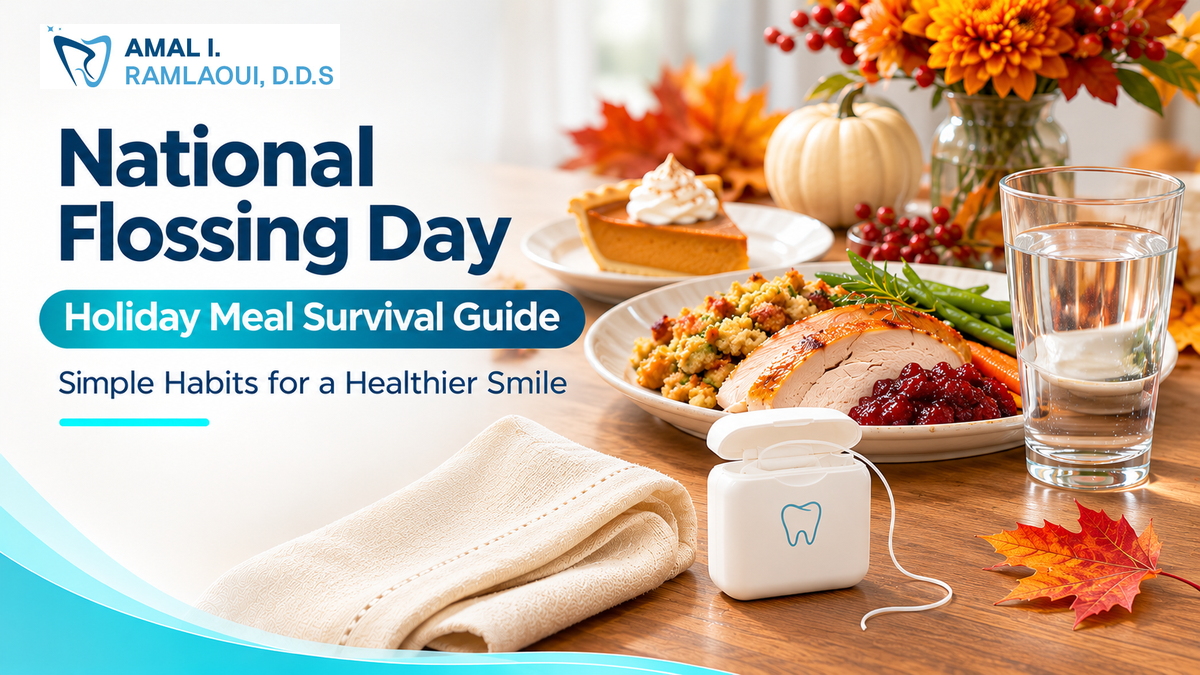
National Flossing Day: How to Keep Your Smile Thanksgiving-Ready (Even After a Second Slice of Pie)
The turkey is carved, the pie is gone, and there’s a fork-shaped dent in the leftover stuffing. Somewhere between the second helping and the third, a stray strand of turkey has also wedged itself between two of your back teeth.
Sound familiar? Then you’re in the right place, because today is National Flossing Day. It lands every year on the day after Thanksgiving, and it’s the best excuse we know of to look at the part of your mouth your toothbrush can’t reach.
At Amal Ramlaoui DDS in San Jose, we’re not here to scold you about pie. We think you should enjoy every bite of the holiday. We just want you to know a few simple moves that protect your teeth and gums while you do. Here are our best National Flossing Day dental tips, plus a holiday survival guide you can use all the way through New Year’s.
Why the Day After Thanksgiving?
The National Flossing Council started National Flossing Day in 2000, and the timing is no accident. A big holiday meal is basically an obstacle course for the spaces between your teeth.
Stringy turkey, soft rolls, and fibrous veggies all love to hide in tight spots. Sticky desserts cling to enamel. And a long afternoon of nibbling means your teeth spend hours in contact with sugar and starch.
The core idea behind the day is a simple one: your toothbrush cleans the fronts, backs, and tops of your teeth, but it can’t reliably get into the narrow gaps between neighbors. The American Dental Association (ADA) recommends cleaning between your teeth once a day for exactly that reason. Plaque, the sticky film of bacteria that builds up on teeth, loves to settle in those gaps. Left alone, it can lead to cavities and irritated, inflamed gums, and some of it can harden into tartar that only a dental professional can remove.
So this isn’t about flossing once a year. Think of today as a reminder that daily cleaning between teeth deserves a spot in your routine.
Your Thanksgiving Plate, Tooth Edition
No food is “banned” at our house, and it shouldn’t be at yours either. A holiday meal doesn’t automatically cause cavities. What matters most is how often and how long your teeth are exposed to sugars and acids. Here’s how the usual suspects stack up.
The sticky stuff: pecan pie, caramel, toffee. These are sugar-rich and tend to cling to teeth or settle into grooves. Plaque bacteria turn sugar into acid, and acid gradually weakens enamel. Your best move is to enjoy dessert with the meal instead of grazing on sweets for six hours. Fewer “sugar moments” means fewer acid attacks.
The comfort carbs: stuffing, rolls, mashed potatoes. Starches aren’t villains, but they can break down into sugars, and they pack easily into tight spaces between teeth. Soft bread is a notorious offender. This is where flossing earns its keep.
The sippers: cider, wine, and sparkling drinks. Acidic beverages can soften the surface of your enamel when you sip them continuously. Have them with the meal rather than all afternoon, and follow up with plain water.
The tooth-friendly picks: turkey, cheese, crunchy veggies. Protein and calcium-rich foods fit nicely into a smile-conscious plate, and crunchy vegetables get you chewing, which boosts saliva. Saliva is your mouth’s natural defense: it buffers acids, helps repair enamel, and clears away some food debris. (Crunchy veggies don’t replace brushing and flossing, though, and very hard foods can be rough on vulnerable teeth or dental work.)
The takeaway: don’t sort your food into good and bad. Pay attention to frequency, texture, and acidity, and keep your cleaning routine steady.
How to Floss Like You Mean It
Most people floss with good intentions and questionable technique. Too much force can irritate your gums, and zipping the floss straight up and down through the contact point can leave plaque behind on the sides of the teeth. Here’s the gentle, effective way.
- Start with about 18 inches of floss. Wind most of it around the middle finger of one hand and the rest around the middle finger of the other, leaving a short working section between your hands.
- Slide it in gently. Use a soft back-and-forth motion to guide the floss between teeth. Don’t snap it down into your gums.
- Hug each tooth in a C-shape. Once the floss reaches the gumline, curve it against the side of one tooth and glide it up and down, just under the gum edge, without forcing it.
- Switch sides. Repeat on the neighboring tooth, so both surfaces of every gap get cleaned. Don’t forget the backs of your last molars.
- Use a fresh section as you go. Move along the floss so you’re not just redistributing plaque.
Before or after brushing? Either is fine. Many patients find bedtime easiest because it clears the day’s debris. The best time to floss is the time you’ll actually do it.
If floss repeatedly shreds or catches in the same spot, mention it at your next visit. That can be a sign of a rough filling edge or a trapped area worth checking.
Not a String-Floss Fan? You Have Options
Here’s a secret: the best interdental tool is the one you’ll use consistently. If traditional floss feels like wrestling an octopus, try one of these.
- Floss picks. Easy to use one-handed, tuck into a purse, and handy at holiday gatherings. They’re less adaptable than string floss in some spots, but they’re a practical choice if they get you cleaning every day.
- Interdental brushes. Tiny brushes that fit between teeth, especially useful where gaps are larger or around certain gum conditions. Size matters: too big can injure gums, too small won’t clean well.
- Water flossers. These use a pulsing stream of water to flush debris and disrupt plaque along the gumline. They can be especially helpful with braces, bridges, or implants, or if hand dexterity is limited. Results depend on the device and your technique.
Not sure which is right for you? Your dentist or hygienist can match a tool to your tooth spacing, dental work, and gum health. Take a look at our preventive dental services to see how we help patients build a routine that fits.
Six Holiday Habits That Actually Work
You don’t need a complicated plan. These small moves protect your smile without cramping your holiday style.
1. Keep water within reach. Sip it through the day and after meals to rinse away loose food and soften the effects of sugary or acidic drinks. Fluoridated tap water gives you a little extra cavity protection too.
2. Make dessert an event, not an all-day buffet. A slice of pumpkin pie with dinner is a very different story from picking at cookies and candy for hours. Every sugar exposure gives plaque bacteria another chance to make acid.
3. Respect the hard stuff. Nuts, brittle, hard crackers, and ice can crack teeth or loosen dental work. Don’t use your teeth to crack shells or open packages, and if you have a temporary crown or filling, follow your dentist’s eating instructions.
4. Never skip the bedtime routine. After a late night of football and family, it’s tempting to crash. Brush for two minutes with fluoride toothpaste and clean between your teeth anyway. It takes less time than the dishes.
5. Hold off on brushing right after acidic foods or drinks. Rinse with water, then wait about an hour. Acid temporarily softens enamel, and brushing too soon can wear it down.
6. Don’t tough out dental pain. A sharp twinge when chewing, a chipped tooth, a loose filling, or gums that stay swollen all deserve a call, even on a holiday weekend. Severe facial swelling, trouble breathing, or difficulty swallowing needs urgent medical attention right away.
Holiday Stress Can Land in Your Jaw
Between travel, shopping, family dynamics, and year-end deadlines, November is a lot. For many people, stress shows up as jaw clenching or teeth grinding (bruxism). Fittingly, November is also TMJ Awareness Month.
Watch for these signs:
- Jaw soreness or stiffness
- Morning headaches
- Tenderness in the chewing muscles
- Tooth sensitivity or unusual wear
- Discomfort opening or closing your mouth
These symptoms have several possible causes and don’t automatically mean you have a temporomandibular disorder, but they’re worth mentioning to your dentist.
In the meantime, try this: let your lips rest together with your teeth slightly apart when you’re not eating or talking. Skip ice chewing, using your teeth as tools, and non-stop gum chewing if they aggravate your jaw. Sleep, movement, and relaxation help too. At our office, preventive options include mouthguards, though whether one is right for you takes an individual evaluation.
Is That Bleeding Normal? A Gum Health Reality Check
Flossing isn’t just about rescuing a piece of turkey. Its bigger job is disrupting plaque along the gumline, where it can trigger gingivitis, an early form of gum disease marked by redness, swelling, tenderness, or bleeding.
Occasional bleeding can happen when you start cleaning between teeth that have been neglected, or when your technique is too rough. Bleeding that keeps happening is not something to shrug off. Don’t quit flossing; call your dentist instead.
Why does it matter? Untreated gingivitis can progress to periodontitis, which affects the bone and tissue that hold your teeth in place and requires specialized treatment and long-term maintenance. Gum disease can also develop with very little pain, which is why regular exams matter. If your gums bleed often, look swollen, or seem to be pulling back, it’s time for an assessment.
Traveling for the Holidays? Pack a Mini Dental Kit
Road trips, airports, and guest rooms make routines wobble. The fix is preparation, not perfection.
- Toss a travel toothbrush, fluoride toothpaste, and your preferred floss or interdental cleaner into your carry-on or overnight bag, not the bottom of your suitcase.
- If you wear a retainer, nightguard, or other removable appliance, bring its case. Never wrap it in a napkin at the table, because that’s how appliances end up in the trash.
- Forgot your floss? One missed session won’t wreck your smile. Rinse with water if you can and pick the routine back up as soon as possible.
Teaching Kids to Floss (Without the Drama)
National Flossing Day is a great chance to bring the whole family on board.
Children generally need cleaning between teeth once two neighboring teeth touch and the gap can’t be reached by a toothbrush. Younger kids need a grown-up’s help, since flossing takes coordination, and they’ll gradually become more independent as their motor skills develop.
Make it part of the same daily routine as brushing, demonstrate the steps, and look into kid-sized floss picks if string floss is too tricky. One more tip: skip candy as a reward for brushing. Stickers, praise, or a family activity send a much better message.
Looking for a family dentist in San Jose? Explore our dental services and ask about age-appropriate preventive care at your next visit.
Home Care Is Great. It Isn’t Everything.
Even flawless brushing and flossing can’t remove hardened tartar or reveal trouble hiding under an old filling. That’s what professional exams and cleanings are for. Your dentist can also spot technique tweaks you’d never notice on your own.
How often should you come in? Many patients visit about every six months, but your ideal schedule depends on your cavity risk, gum health, dental history, and medical conditions. Some people need more frequent visits, and others can go longer. For the full picture, read our related article, Why Your 6-Month Dental Exam Is Just as Important as Your Annual Physical.
Haven’t been in a while? Year-end is a perfect time to check in.
Request an appointment online with Amal Ramlaoui, DDS
Don’t Let Your Dental Benefits Expire
If you have dental insurance, December is the moment to take a look at what you haven’t used. Many plans run on a calendar year, so benefits and annual maximums may reset on January 1, but not every plan works that way. Deductibles, waiting periods, and coverage limits also vary.
A few pointers:
- Check your preventive coverage. Find out whether your plan covers another exam or cleaning this benefit period.
- Revisit past recommendations. If a filling, crown, or periodontal treatment was suggested, now’s a good time to review it. Schedule based on clinical need, not just to use up benefits, and don’t delay urgent care to match an insurance renewal date.
- Verify before you book. Confirm coverage with your insurer, then talk with our office about scheduling and estimates. Holiday calendars fill up fast, so planning early helps.
Questions? Call us at 408-275-6430.
Why San Jose Families Choose Amal Ramlaoui DDS
Great oral health takes daily habits at home and a dentist you trust. Our practice has been serving the San Jose community since 1996, offering preventive, restorative, and cosmetic dentistry with a focus on helping you understand your options.
Our preventive services include:
- Professional teeth cleaning to remove plaque and tartar and support gum health
- Fluoride treatments to help strengthen enamel and reduce cavity risk when appropriate
- Dental sealants to protect the grooves of certain vulnerable teeth
- Mouthguards to protect teeth in specific situations
If you need more than preventive care, we also offer fillings, crowns, bridges, and other restorative treatments.
Find us at:
Amal I. Ramlaoui, D.D.S.
2025 Forest Ave, Suite 1A
San Jose, CA 95128
We welcome patients from San Jose, Santa Clara, Sunnyvale, Cupertino, Saratoga, Milpitas, and nearby communities.
Your Quick Daily Checklist
Screenshot this one for the fridge:
- Brush twice a day for two minutes with fluoride toothpaste.
- Clean between your teeth once a day with floss or another interdental cleaner.
- Cut back on constant sugary snacks and drinks.
- Drink water regularly, especially after meals and acidic drinks.
- Keep up with exams and cleanings on the schedule your dentist recommends.
- Call your dentist when something feels off instead of waiting.
You can still enjoy the pumpkin pie, cranberry sauce, and everything else on the table. You just do it with a plan.
National Flossing Day and Thanksgiving Dental Care: Your Questions, Answered
When is National Flossing Day in 2026?
Friday, November 27, 2026, the day after Thanksgiving. It’s observed the day after Thanksgiving annually to promote cleaning between teeth.
How often should I floss over Thanksgiving weekend?
The ADA recommends cleaning between your teeth once daily. Feel free to remove uncomfortable stuck food as needed, but repeated, aggressive flossing after every bite isn’t necessary and can irritate your gums.
Should I floss before or after brushing?
Either works. Some people floss first to loosen plaque before brushing; others prefer to floss afterward. What matters is using good technique consistently.
Can Thanksgiving food cause cavities?
Holiday foods don’t automatically cause cavities. Frequent exposure to sugars and fermentable carbohydrates, combined with inadequate cleaning, is what raises the risk. Enjoying treats with meals and keeping up your hygiene helps manage it.
Is it okay to brush right after dinner?
If your meal included acidic foods or drinks, rinse with water and wait about an hour before brushing so you don’t scrub softened enamel.
Why do my gums bleed when I floss?
Bleeding can come from gum inflammation, rough technique, or another oral health issue. Don’t force the floss. If bleeding persists or comes with swelling or discomfort, schedule a dental evaluation.
Is a water flosser as good as string floss?
Water flossers can be great for some people, especially those with braces or difficulty handling string floss, but effectiveness depends on your needs and technique. Your dentist can recommend the best tool for you.
Should I schedule a cleaning before the end of the year?
If you’re due for preventive care, year-end can be convenient. Check your insurance benefits and ask your dentist what interval fits your needs, but don’t put off necessary treatment just because of insurance timing.
Where can I book a dental appointment in San Jose?
Request a visit through our online appointment page or call 408-275-6430. We’re at 2025 Forest Ave, Suite 1A, San Jose, CA 95128.
Final Thoughts: Enjoy the Feast, Floss the Gaps
Thanksgiving is about gratitude, family, and good food, and your oral care shouldn’t get in the way of any of it. Clean between your teeth daily, go easy on constant sugar exposure, stay hydrated, and speak up when something feels wrong. Those simple habits go a long way.
National Flossing Day is your annual nudge that small daily choices do the heavy lifting. And when you’re ready for a professional checkup, we’d love to see you.
Ready to Start the New Year With a Healthier Smile?
Book Your Year-End Dental Visit Online
Or call 408-275-6430 | www.ramlaouidds.com
Happy Flossing Day, and happy holidays from all of us at Amal Ramlaoui DDS.
References and Further Reading
- American Dental Association: Flossing and Interdental Cleaning
- Mayo Clinic: Brushing Your Teeth: How Often and When?
- American Dental Association: Home Oral Care
Medical disclaimer: This article is for general educational purposes and does not replace personalized dental or medical advice. Please consult a qualified dental professional for diagnosis, treatment, and recommendations tailored to your oral health.

