
Gum Disease: 8 Warning Signs You Should Never Ignore
Gum Disease: 8 Warning Signs You Should Never Ignore
Gum disease is one of the most widespread health conditions in the United States and one of the most overlooked. It doesn’t usually hurt in the early stages. There’s no dramatic moment that sends you running to the dentist. It just quietly progresses in the background while you go about your life, until one day a tooth feels loose, or your dentist tells you that you’ve already lost bone.
That’s the part that catches most patients off guard. By the time gum disease becomes obvious, it’s often been developing for years. The good news is that when it’s caught early, it’s completely reversible. And even in advanced stages, the right treatment can stop it in its tracks and protect the teeth you still have.
This guide covers the 8 warning signs to watch for, the stages of gum disease, what treatment looks like at each stage, and most importantly how to prevent it from taking hold in the first place. If you’re a patient at Ramlaoui DDS in San Jose, or looking for a dentist who takes gum health seriously, read on.
Table of Contents
- What Is Gum Disease?
- How Common Is Gum Disease?
- 8 Warning Signs of Gum Disease
- The 4 Stages of Gum Disease
- Gum Disease and Your Overall Health
- How Is Gum Disease Treated?
- How to Prevent Gum Disease
- Frequently Asked Questions
What Is Gum Disease?
Gum disease also called periodontal disease is a bacterial infection of the tissues that surround and support your teeth. It starts with plaque: that sticky film of bacteria that forms on your teeth every single day. When plaque isn’t removed through brushing and flossing, it hardens into tartar a calcified buildup that can only be removed by a dental professional.
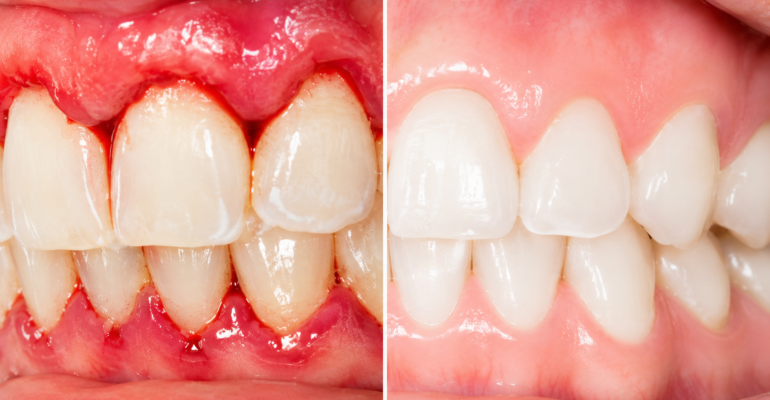
As tartar builds up along and below the gumline, it triggers an inflammatory response in the surrounding gum tissue. The gums become red, swollen, and prone to bleeding. At this early stage, it’s called gingivitis — and it’s 100% reversible with proper treatment and improved home care.
Left untreated, the infection spreads deeper. The gums begin to pull away from the teeth, creating pockets where bacteria accumulate out of reach of your toothbrush. The bone and connective tissue that hold your teeth in place start to break down. This is periodontitis — and at this stage, the damage cannot be fully reversed, only managed.
💡 The most important thing to understand about gum disease: it is almost always painless in the early stages. Pain is a late symptom. By the time it hurts, significant damage has often already occurred.
How Common Is Gum Disease?
Far more common than most people realize. According to the Centers for Disease Control and Prevention, nearly 50% of American adults over the age of 30 have some form of gum disease. Among adults over 65, that number climbs to over 70%.
It’s the leading cause of tooth loss in adults — not cavities, not accidents, but gum disease. And because it develops slowly and silently, millions of people are living with it right now without knowing it.
🔗 CDC — Oral Health: Adult Gum Disease Data →
💡 Gum disease is the #1 cause of tooth loss in adults. It surpasses cavities, accidents, and any other dental condition combined.
8 Warning Signs of Gum Disease
Most patients who walk into Ramlaoui DDS with advanced gum disease didn’t ignore dramatic symptoms they just didn’t know what to look for. Here are the eight signs that should prompt you to pick up the phone and schedule an appointment:
1. Gums That Bleed When You Brush or Floss
This is the most common early sign and the most commonly dismissed. Many people assume that a little blood when flossing is normal, or that they’re just brushing too hard. It’s not normal. Healthy gums do not bleed from routine brushing and flossing. Bleeding gums are inflamed gums, and inflamed gums are a sign that bacteria are winning the fight along your gumline.
If you see blood in the sink consistently, don’t wait for your next routine checkup. Come in sooner.
2. Red, Swollen, or Puffy Gums
Healthy gums are firm, pale pink, and fit snugly around each tooth. Gums affected by gum disease look different they’re redder, sometimes purplish, and have a puffy or spongy texture. You might notice that the triangular sections of gum between your teeth look rounded or enlarged rather than sharp and defined.
Swelling is your body’s inflammatory response to bacterial infection. If it’s visible to you in the mirror, it’s been going on long enough to warrant professional attention.
3. Persistent Bad Breath
Bad breath that doesn’t improve with brushing, flossing, or mouthwash is a significant red flag. The bacteria responsible for gum disease produce volatile sulfur compounds the same gases that cause the characteristic smell of decay. If a patient comes to us saying they’ve tried everything and their breath still bothers them, gum disease is near the top of our differential.
This symptom is often more noticeable to the people around you than to yourself, which is why it sometimes goes unaddressed for a long time.
4. Receding Gums
If your teeth look longer than they used to, or if you can see more of the tooth root near the gumline than before, your gums are receding. Gum recession happens when the tissue is destroyed by bacterial infection and pulls away from the tooth surface.
Receding gums expose the root of the tooth which has no enamel protection making teeth more sensitive to temperature and more vulnerable to decay. Once gum tissue recedes, it doesn’t grow back on its own. Treatment can stop the recession and, in some cases, tissue grafting can restore lost coverage.
5. Teeth That Feel Loose or Are Shifting
If a tooth that has always been stable suddenly feels slightly mobile, or if you notice gaps developing between teeth that weren’t there before, this can indicate that the bone supporting those teeth has been compromised. Bone loss from advanced gum disease weakens the foundation your teeth sit in, causing them to shift, splay outward, or loosen.
🚨 Loose teeth are a sign of advanced periodontal disease. This requires immediate evaluation — do not wait for a routine appointment.
6. Pain When Chewing
Gum disease is typically painless in its early and moderate stages — which is exactly what makes it so dangerous. When chewing becomes uncomfortable or painful, it usually means the infection has progressed to affect the deeper structures supporting the tooth: the periodontal ligament and the surrounding bone. Pain is a late symptom, not an early one.
7. Visible Pus Around the Teeth or Gums
Pus is a clear sign of active infection. If you notice a white or yellowish discharge around your gumline, or if pressing on your gum produces any fluid, you have an active bacterial infection that needs professional treatment right away. This is not something that will resolve on its own.
8. A Change in Your Bite or How Your Teeth Fit Together
As bone is lost and teeth begin to shift, the way your upper and lower teeth come together when you bite can change. If your bite suddenly feels different, or if a dental appliance like a retainer or night guard no longer fits the way it used to, it may indicate that tooth movement from bone loss has occurred.
⚠️ If you have 3 or more of these symptoms, schedule a dental evaluation as soon as possible. Early intervention dramatically changes the outcome.
The 4 Stages of Gum Disease
Understanding where you are on the spectrum helps you understand what treatment will look like and what’s still possible to save. Here’s how gum disease progresses:
| Stage | Symptoms | Bone/Tissue Damage | Treatment |
| Gingivitis | Red, puffy, bleeding gums; bad breath | None — fully reversible | Professional cleaning + improved home care |
| Mild Periodontitis | Gum pockets 4–5mm; some recession | Beginning bone loss | Scaling & root planing (deep cleaning) |
| Moderate Periodontitis | Deeper pockets 5–7mm; gum pulling away | Moderate bone and tissue loss | Deep cleaning + possible antibiotics |
| Severe Periodontitis | Pockets 7mm+; loose teeth; pus; pain | Significant bone loss | Periodontal surgery; possible extractions |
The most important takeaway from this table: gingivitis is completely reversible. Once you cross into periodontitis, the goal shifts from reversal to management and stabilization. You can stop gum disease from progressing but the bone and tissue already lost don’t come back without surgical intervention.
Gum Disease and Your Overall Health — Why It’s Bigger Than Your Mouth
This is the part of the conversation that surprises most patients. Gum disease isn’t just a dental problem. The infection doesn’t stay contained to your mouth the bacteria and inflammatory compounds it produces can enter the bloodstream and affect organs and systems throughout the body.
The research connecting gum disease to systemic health conditions has grown substantially over the past decade. Here’s what the science currently shows:
Heart Disease
Studies have found that people with gum disease are significantly more likely to develop cardiovascular disease. The bacteria that cause periodontal infection can travel through the bloodstream to the walls of arteries, contributing to inflammation and plaque buildup. The American Academy of Periodontology has called the connection between gum disease and heart disease one of the most significant findings in oral health research.
Diabetes
The relationship between gum disease and diabetes runs in both directions. Uncontrolled blood sugar makes the body more vulnerable to infection including periodontal infection. And gum disease, in turn, makes blood sugar harder to control. A 2026 clinical study found that successfully treating tooth infections led to measurable improvements in blood sugar levels and reduced systemic inflammation in patients with diabetes.
Pregnancy Complications
Research has linked untreated gum disease during pregnancy to increased risk of preterm birth and low birth weight. Pregnant patients who develop gum disease — which is more likely due to hormonal changes — are encouraged to seek periodontal evaluation promptly.
Respiratory Disease
Bacteria from the mouth can be inhaled into the lungs, contributing to respiratory infections and worsening conditions like pneumonia, especially in older adults or those with compromised immune systems.
💡 Taking care of your gums isn’t just about keeping your teeth. It’s about protecting your heart, your blood sugar, and your overall health for the long term.
🔗 American Academy of Periodontology — Gum Disease and Systemic Health →
How Is Gum Disease Treated?
Treatment depends entirely on the stage you’re in when it’s caught. Here’s what each level of care involves:
Stage 1 — Gingivitis: Professional Cleaning + Improved Home Care
At the gingivitis stage, a professional cleaning removes the plaque and tartar buildup that’s driving the inflammation. Paired with consistent daily brushing and flossing at home, this is often all it takes to fully reverse gingivitis within a few weeks. No surgery, no anesthesia, no complex procedures — just a cleaning and a commitment to the routine.
Stage 2–3 — Mild to Moderate Periodontitis: Scaling and Root Planing
When the infection has spread below the gumline, a standard cleaning isn’t enough. Scaling and root planing often called a deep cleaning is the first line of treatment. We use specialized instruments to clean below the gumline, remove bacterial deposits from the root surfaces, and smooth the roots to discourage future bacterial attachment.
This procedure is done under local anesthesia and is typically split across two appointments (one side of the mouth at a time). Most patients experience minimal discomfort afterward. The gums then need time to heal and reattach to the cleaned root surfaces.
In some cases, antibiotics (either systemic or placed directly into the gum pockets) are used alongside scaling and root planing to help control the bacterial infection.
Stage 4 — Severe Periodontitis: Periodontal Surgery
When pockets are too deep for instruments to reach, or when bone loss is significant, surgical intervention may be necessary. Periodontal surgery allows direct access to the affected roots and bone, enabling more thorough cleaning and sometimes bone regeneration procedures.
In cases where teeth can no longer be saved, extraction followed by replacement with dental implants or other restorations becomes part of the treatment plan.
Ongoing Maintenance: Periodontal Therapy Visits
Once gum disease has been treated, the standard twice-yearly cleaning schedule often isn’t enough to keep it under control. Most patients who’ve had periodontitis are placed on a periodontal maintenance schedule typically every 3 to 4 months to monitor pocket depths, check for signs of reactivation, and provide the more thorough cleaning that treated gum disease requires.
Periodontal maintenance isn’t optional. Patients who skip it consistently see their gum disease return. Patients who commit to it can maintain stable, healthy gums for decades.
👉 Read More: Sensitive Teeth — 11 Causes, Proven Treatments & When to See a Dentist
How to Prevent Gum Disease
The best treatment for gum disease is not needing treatment. Here’s what consistently works for prevention:
- Brush twice daily — use a soft-bristled brush and spend at least two minutes, making sure to angle the brush toward the gumline to clean just below it
- Floss every single night — flossing removes the plaque from between teeth and along the gumline where brushing can’t reach; this is non-negotiable
- Consider a water flosser — particularly effective for patients who struggle with traditional floss or who have gum pockets, implants, or bridgework
- Use a fluoride toothpaste — fluoride strengthens enamel and helps keep the oral bacteria environment healthier
- Don’t smoke — smoking is one of the most significant risk factors for gum disease, dramatically slowing healing and masking early warning signs like bleeding
- Manage diabetes and blood sugar — uncontrolled blood sugar creates an environment where periodontal bacteria thrive
- See your dentist every 6 months — professional cleanings remove tartar that home brushing cannot, and regular checkups catch early gingivitis before it progresses
- Mention medications that cause dry mouth — saliva is a natural defense against oral bacteria; reduced saliva flow increases gum disease risk
None of these steps are complicated. The patients who maintain healthy gums for life are almost always the ones who are simply consistent — not perfect, just consistent.
Concerned About Gum Disease in San Jose? Let Us Take a Look.
If any of the eight warning signs in this article sound familiar — or if you honestly can’t remember the last time you had a professional cleaning — it’s time to come in. Gum disease caught early is a very manageable problem. Gum disease caught late is a very different conversation.
At Ramlaoui DDS, we evaluate gum health at every examination. We measure pocket depths, check for recession, and screen for early signs of periodontal disease before patients even know to ask. Our approach is thorough, honest, and focused on helping you keep your teeth for life.
We serve patients throughout San Jose and the Bay Area. Whether you’re due for a routine cleaning or you’ve been putting off an overdue visit, we’d love to help.
📞 Schedule your gum health evaluation at Ramlaoui DDS in San Jose — protecting your smile starts with your gums.
Related reading from our blog:
👉 Smile Makeover: 6 Treatments That Transform Your Smile
👉 Dental Bonding: What It Is, How It Works & Is It Right for You?
Gum Disease FAQs — San Jose
Can gum disease be cured completely?
Gingivitis — the earliest stage of gum disease — is completely reversible with professional cleaning and a consistent home care routine. Once gum disease has progressed to periodontitis and bone loss has occurred, it can be effectively treated and stabilized, but the bone and tissue already lost don’t regenerate without surgical intervention. The goal at that point is to stop progression and maintain stability long-term.
Is gum disease contagious?
The bacteria that cause gum disease can be transmitted between people through saliva — primarily through kissing or sharing utensils. However, just being exposed to these bacteria doesn’t guarantee you’ll develop gum disease. Your oral hygiene routine, immune system, genetics, and overall health all play major roles in whether an infection takes hold. Partners of patients with gum disease may want to mention it to their own dentist for a gum health evaluation.
Can gum disease cause tooth loss?
Yes — it’s the leading cause of tooth loss in adults. As the infection progresses and destroys the bone and connective tissue supporting the teeth, those teeth lose their structural foundation and eventually loosen and fall out or require extraction. This is why early detection and treatment are so critical.
Is gum disease treatment painful?
Gingivitis treatment (a professional cleaning) involves no discomfort beyond the routine sensation of a dental cleaning. Scaling and root planing is done under local anesthesia, so the procedure itself is comfortable. You may experience some soreness in the treated area for a day or two afterward — manageable with over-the-counter pain relievers. Most patients are surprised by how tolerable it is compared to what they expected.
How long does gum disease treatment take?
Treatment timeline depends on severity. Gingivitis may be resolved in a single cleaning appointment followed by improved home care. Scaling and root planing is typically split into two visits (one per side of the mouth), with a follow-up appointment 4 to 6 weeks later to evaluate healing. Advanced cases requiring surgery involve additional appointments and a longer healing period. Your dentist will map out a clear timeline at your evaluation.
Does dental insurance cover gum disease treatment?
Most dental insurance plans cover gum disease treatment — at least partially — because it’s a medically necessary procedure, not a cosmetic one. Routine cleanings, scaling and root planing, and periodontal maintenance visits are typically covered under standard dental plans, though coverage percentages vary. We’ll verify your benefits and give you a clear cost breakdown before any treatment begins.
Can I treat gum disease at home?
You can manage very early gingivitis at home by dramatically improving your brushing and flossing routine — but you can’t treat it properly without removing the tartar buildup that’s driving the inflammation, and only a dental professional can do that. Once gum disease has progressed beyond gingivitis, home care alone will not be sufficient. Think of home care as maintenance, not treatment. The real treatment happens in the dental chair.
Final Thoughts
Gum disease is almost entirely preventable — and when it does develop, it’s almost entirely treatable if caught early. The problem is that it rarely announces itself with pain or dramatic symptoms until it’s already done significant damage.
The eight warning signs in this guide exist because that’s your window — the period between ‘something is starting to go wrong’ and ‘this is now a serious problem.’ If something in this article resonated with you, that’s not a coincidence. It’s worth a phone call.
At Ramlaoui DDS, we see patients at every stage of gum disease — from first-time gingivitis to complex cases requiring surgical referral. What matters to us is getting you the right care at the right time, with complete honesty about where things stand and what your options are.
Your gums are the foundation of your smile. Take care of them, and the rest follows.

