
AI Cavity Detection: Technology vs Human Expertise
AI Cavity Detection: Technology vs Human Expertise
AI cavity detection is one of the most talked-about innovations in modern dentistry. Patients frequently ask: Can artificial intelligence truly detect cavities more accurately than an experienced dentist?
The short answer: AI cavity detection does not replace your dentist — it enhances diagnostic precision.
Let’s examine how AI dental X-ray analysis works and whether it truly outperforms human expertise.
What Is AI Cavity Detection?
AI cavity detection refers to the use of artificial intelligence algorithms to analyze digital dental X-rays (radiographs) and identify early signs of tooth decay.
Using advanced machine learning models trained on thousands — sometimes millions — of annotated radiographic images, AI software can:
- Detect early enamel demineralization
- Identify interproximal cavities (between teeth)
- Highlight recurrent decay beneath existing restorations
- Flag suspicious radiolucencies for further review
In practical terms, AI functions as a highly trained second reviewer during diagnosis.
How AI Dental X-Ray Analysis Works
AI dental X-ray analysis follows a structured clinical workflow:
1. Digital Image Capture
The dentist captures a digital radiograph using modern imaging systems. Digital radiography provides clearer images and exposes patients to significantly lower radiation than traditional film X-rays.
2. AI Algorithm Processing
The image is instantly analyzed by AI software integrated into the practice’s imaging platform. The algorithm evaluates pixel density variations and compares them to vast datasets of confirmed cavity cases.
3. Highlighted Diagnostic Indicators
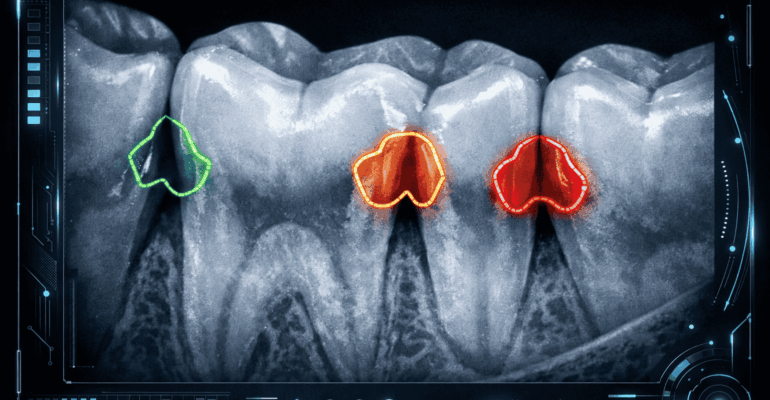
The software overlays color-coded markers on areas of concern, often assigning probability scores to indicate severity or likelihood of decay.
4. Dentist Review and Clinical Correlation
The dentist evaluates AI findings alongside:
- Clinical examination results
- Patient symptoms
- Bitewing history
- Visual and tactile inspection
A final diagnosis is always made by the dentist — not the software.
AI suggests. The clinician confirms.
Is AI Cavity Detection More Accurate Than a Human Dentist?
The more precise question is whether AI cavity detection improves diagnostic outcomes.
Strengths of AI Cavity Detection
- Consistency: AI does not experience fatigue or variability.
- Early Detection: Identifies subtle density changes that may be difficult to see with the naked eye.
- Real-Time Second Opinion: Every X-ray receives dual-layer analysis.
- Reduced Diagnostic Variation: Minimizes subjective interpretation differences between providers.
Limitations of AI
- Cannot assess patient discomfort or symptoms
- Cannot evaluate soft tissue clinically
- Cannot replace tactile exploration
- May generate false positives without contextual judgment
Research increasingly indicates that AI-assisted diagnosis enhances early cavity detection rates when combined with clinical expertise, not when used independently.
Why Early Cavity Detection Matters
Early cavity detection significantly reduces the need for invasive treatment. Identifying decay in its earliest stage can prevent:
- Large restorations
- Root canal therapy
- Tooth fractures
- Extensive crown procedures
According to the American Dental Association, early diagnosis improves long-term oral health outcomes and minimizes complex restorative interventions.
AI cavity detection helps identify decay at a stage where remineralization or minimally invasive dentistry may be possible.
AI in Dentistry in 2026 and Beyond
Artificial intelligence in dentistry extends beyond cavity detection. Modern systems now assist with:
- Treatment planning
- Orthodontic simulations
- Implant placement guidance
- Periodontal risk evaluation
In 2026, AI integration is becoming a standard component of technologically advanced dental practices. Patients value visual transparency, and AI-generated overlays allow them to clearly see areas of concern on-screen.
This improves case acceptance, trust, and informed decision-making.
So, Is AI Better Than a Human Dentist?
No.
But AI cavity detection makes dentists more accurate and consistent.
The optimal diagnostic model combines:
AI precision + Clinical expertise + Patient-centered care
Dentistry remains grounded in human judgment, ethical responsibility, and individualized treatment planning. AI is simply the most advanced diagnostic support tool available today.
Final Thoughts
If you are curious how AI cavity detection can improve your dental care experience, consider visiting a practice that integrates AI dental X-ray analysis into its workflow. Viewing your radiographs with AI-assisted insights can provide greater clarity and confidence in your diagnosis.
Modern dentistry is not about replacing professionals with machines.
It is about leveraging intelligent tools to deliver healthier, longer-lasting smiles.
Experience AI Cavity Detection at Ramlaoui DDS
At Ramlaoui DDS, we combine advanced AI cavity detection technology with expert clinical judgment to ensure accurate and early diagnosis. Our AI dental X-ray analysis enhances precision, increases transparency, and helps you understand your oral health in real time.
If you are ready to experience smarter, more precise dentistry, schedule your AI-powered dental exam at Ramlaoui DDS today. A personalized evaluation using advanced digital imaging and artificial intelligence will show you exactly what is happening beneath the surface — so you can make confident decisions about your smile in 2026 and beyond.
Book your consultation today and discover how technology and expertise work together for your healthiest smile.

