
Why Your 6-Month Dental Exam Is Just as Important as Your Annual Physical
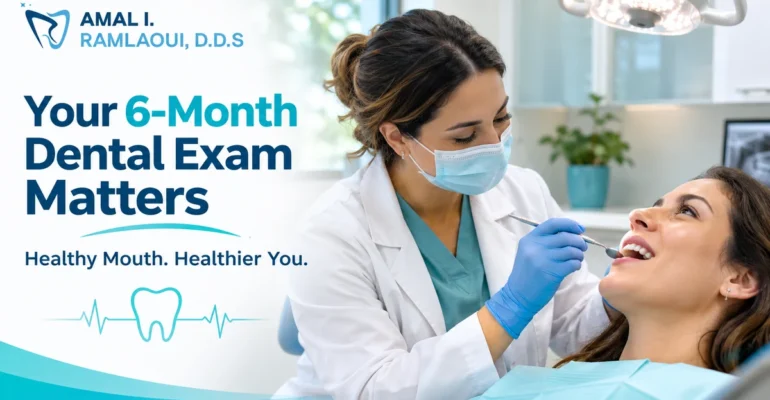
Why Your 6-Month Dental Exam Is Just as Important as Your Annual Physical
A 6-month dental exam does far more than check for cavities. It lets your dentist monitor your teeth, gums, and oral tissues, catch problems while they’re small, and spot changes that may point to your overall health.
You probably book your annual physical even when you feel fine, because you know prevention works best before symptoms start. Dental care deserves the same priority. Yet many people skip checkups because nothing hurts and their smile looks fine. The trouble is that cavities and gum disease often develop quietly.
At Amal Ramlaoui DDS in San Jose, California, we believe preventive dentistry belongs in every healthcare routine. Below, you’ll find why regular dental exams matter, what happens during a visit, and how to find the right schedule for you.
Request your 6-month dental exam online
1. Your Mouth Can Offer Clues About Your Overall Health
Your mouth is part of your body, not a separate system. Its tissues, blood vessels, and bacteria interact with the rest of you, so changes in your gums, tongue, saliva, or oral tissues can sometimes signal something that needs medical follow-up. Persistent dry mouth, for example, may be linked to medications, autoimmune conditions, or other health concerns.
These signs have many possible explanations, and a dental exam is not a substitute for blood work or a visit to your physician. What your dentist can do is recognize unusual findings and recommend further evaluation when appropriate.
Oral Health and Diabetes
Diabetes offers one of the clearest examples. According to the CDC, high blood sugar makes it harder for the body to fight infection, including infections in the gums. People with diabetes face a higher risk of periodontal disease, especially when blood sugar is poorly controlled, and gum disease can in turn make diabetes harder to manage.
If you have diabetes, tell your dentist about your diagnosis, medications, and any changes in your health so your preventive care and follow-up schedule can reflect them.
2. Gum Disease Can Progress Without Much Pain
One big reason to keep your 6-month dental exam is that gum disease rarely announces itself with a toothache.
It often starts as gingivitis, an early inflammation linked to plaque along the gumline. Signs include bleeding when you brush, swollen gums, and persistent bad breath, though some people notice little or nothing.
Caught early, plaque-related gingivitis can often be reversed with consistent home care and professional cleanings. If it advances to periodontitis, the supporting bone and tissue around your teeth can be damaged, potentially leading to gum recession, loose teeth, or tooth loss. That damage isn’t reversed by brushing alone, and treatment and ongoing maintenance become essential.
During your visit, your dentist may check for gum inflammation, look at areas of recession, and take periodontal measurements when appropriate. You can learn more about our preventive dental services, including professional cleanings. If advanced gum disease is found, we may recommend additional periodontal care, such as a deep cleaning when clinically appropriate.
3. Gum Health and Heart Health Are Associated
Researchers have found associations between gum disease and certain cardiovascular conditions. One possible explanation is chronic inflammation, which researchers are still studying.
An association isn’t the same as cause and effect. Current evidence does not show that routine cleanings prevent heart attacks or that treating gum disease removes cardiovascular risk. Still, caring for your gums protects your teeth and your ability to chew comfortably, and it’s worth doing well.
If you have heart disease, keep following your physician’s guidance. Let your dentist know about any heart conditions or medications, since they can affect dental treatment. For more background, see the American Dental Association’s oral-systemic health resources.
4. Regular Exams Catch Problems Before They Hurt
Picture a small area of decay found at a routine visit. Depending on its size and location, your dentist might recommend a preventive measure or a straightforward filling. If that same spot goes unnoticed, decay can weaken the tooth and reach its sensitive inner tissue, and treatment becomes more involved.
Waiting for pain isn’t a reliable strategy. Here’s what routine exams can help catch:
- Early cavities. Decay often starts before you feel anything. Your dentist looks for suspicious spots and weakened enamel, and may use X-rays to see between teeth.
- Cracks. Injury, heavy biting forces, and grinding can crack teeth. Some cracks are harmless surface lines, while others affect tooth structure and need treatment.
- Worn dental work. Fillings, crowns, and bridges can wear or change over time and need periodic evaluation.
When treatment is needed, we offer restorative dental services including fillings, crowns, bridges, and root canal therapy. Preventive exams can help you address concerns before they grow, although not every dental problem can be prevented.
5. Oral Cancer Screening Is Part of a Thorough Exam
A complete dental exam includes the soft tissues of your mouth, not just your teeth. Your dentist may check your tongue, lips, cheeks, gums, palate, and other accessible areas for changes that deserve monitoring, testing, or referral.
Changes Worth Getting Checked
See a dental or medical professional if you notice any of these, especially if they persist or have no obvious cause:
- A mouth sore that doesn’t heal within about two weeks
- An unexplained lump or thickened area
- Persistent red or white patches
- Unusual bleeding or numbness
- Ongoing difficulty swallowing or moving the tongue
- Mouth or throat discomfort with no clear cause
These symptoms don’t automatically mean cancer, since many harmless conditions look similar, but they shouldn’t be ignored. A visual and tactile exam can’t definitively diagnose oral cancer, and suspicious changes may require a biopsy by a specialist. The National Institute of Dental and Craniofacial Research (NIDCR) has more on symptoms and risk factors. If you notice a persistent change, call your provider now rather than waiting for your next scheduled visit.
6. What Happens During a 6-Month Dental Exam?
Every visit is personalized, but a routine exam typically includes these steps:
- Health and dental history review. We’ll ask about changes in your health, medications, allergies, and concerns such as bleeding gums, sensitivity, dry mouth, jaw discomfort, or bite changes.
- Tooth examination. Your dentist checks for decay, cracks, unusual wear, and the condition of existing restorations.
- Gum evaluation. We look for inflammation, recession, and signs of periodontal disease, and may take measurements of the tissues supporting your teeth.
- Soft tissue check. Your dentist examines accessible oral tissues for sores, discoloration, or other abnormalities.
- X-rays when appropriate. X-rays can reveal decay between teeth, certain infections, and bone changes. Not everyone needs them every six months, as frequency depends on age, history, symptoms, and risk.
- Findings and recommendations. Your dentist explains what was found, why a recommendation is being made, and what your options are. Your questions are always welcome.
Ready for your next checkup? Request an appointment with Amal Ramlaoui DDS in San Jose.
7. Dental Exams and Cleanings Are Not the Same Thing
People often use the two terms interchangeably, but they do different jobs. An exam evaluates your oral health and looks for problems. A professional cleaning removes plaque, tartar, and some surface stains while supporting gum health. Both are key parts of preventive dentistry.
Brushing twice daily with fluoride toothpaste and cleaning between your teeth are essential, but plaque left behind can harden into tartar (calculus). Once that happens, brushing and flossing can’t remove it, and professional instruments are needed. Cleanings can also reveal areas you may be missing at home.
Not everyone needs the same cleaning, either. Patients with healthy gums typically need routine preventive cleanings, while those with periodontitis may need scaling and root planing or periodontal maintenance. Learn more about teeth cleaning and preventive care at our practice.
8. Does Everyone Need a Dental Exam Every Six Months?
Six months is a common recall interval, not a universal rule. Many patients do well with twice-yearly visits, some need more frequent care, and a few with consistently low risk may be advised to come less often.
You may benefit from more frequent visits if you have:
- A history of periodontal disease
- Frequent or recurring cavities
- Persistent dry mouth
- Diabetes or another condition that affects oral health
- Tobacco use
- Certain dental appliances or complex restorations
- Difficulty keeping up with oral hygiene
The goal of preventive dentistry isn’t to book unnecessary appointments. It’s to match monitoring and care to your needs, based on your current findings, medical history, past treatment, and how well you maintain your oral health between visits. If you’re unsure which interval is right for you, ask Dr. Amal Ramlaoui for a personalized preventive care plan.
9. Your Physical and Your Dental Exam Work Together
An annual physical focuses on vital signs, chronic conditions, vaccinations, and recommended screenings. A dental exam focuses on your teeth, gums, and mouth. Neither replaces the other. Your physician doesn’t typically perform a detailed exam of your teeth and periodontal tissues, and your dentist can’t replace your physician’s lab work and broader assessments.
Communication between providers helps. Say a new medication reduces your saliva. Your physician prescribed it for a good reason, while your dentist notices the dry mouth raising your cavity risk and suggests protective steps. Likewise, a patient with diabetes may need extra attention to gum health. When each professional understands the relevant parts of your history, your care becomes more coordinated.
Your dental exam and annual physical are complementary preventive visits, not competing priorities.
10. Prevention Can Keep Treatment Simpler
Routine exams can’t guarantee you’ll never need extensive dental work, but finding problems early often gives you simpler options. An early cavity may need a smaller filling than a tooth with extensive decay. Mild gum inflammation is usually easier to manage than advanced periodontal disease. A worn filling is easier to replace before more of the tooth is compromised.
Preventive care aims to reduce avoidable disease, preserve your natural teeth when possible, and support comfortable chewing and speaking. Long-term costs depend on your insurance, risks, and treatment needs, so it’s most accurate to see regular care as a way to reduce certain risks rather than a promise of lower bills. If cost is a concern, ask our office about preventive benefits, estimated costs, and payment options before you schedule.
11. What If You Haven’t Seen a Dentist in Years?
Busy schedules, dental anxiety, cost worries, or healthy-feeling teeth are common reasons for a long gap. Whatever yours was, the best next step is simply an evaluation.
- Start with a current assessment. Your dentist will examine your teeth, gums, and oral tissues, recommend X-rays only if needed, and walk you through the findings.
- Don’t assume the worst. A long gap doesn’t automatically mean major work. Some patients are surprisingly stable, while others have conditions they didn’t know about. An exam is how you find out.
- Tell us if you’re nervous. Let the team know before your visit. You can ask questions, share past experiences, and request explanations before any procedure begins.
You don’t have to wait until something feels urgent to start caring for your smile again.
12. How to Protect Your Teeth and Gums Between Visits
Your 6-month exam works best alongside good daily habits:
- Brush twice a day with a soft-bristled brush and fluoride toothpaste. Focus on the gumline and use gentle pressure, since aggressive brushing can irritate gums and wear teeth.
- Clean between your teeth daily with floss, interdental brushes, or another aid your dental team recommends.
- Limit how often you have sugar. When plaque bacteria break down fermentable carbohydrates, they produce acids that weaken enamel. Frequency matters, so avoid sipping sugary drinks all day, and drink water regularly.
- Avoid tobacco. It’s associated with periodontal disease and oral cancer. Your healthcare providers can discuss quitting resources.
- Ask about added protection. Fluoride treatments, sealants, and mouthguards may help depending on your risk. We offer all of these as part of our preventive services.
- Act on new symptoms. Call us for persistent sensitivity, bleeding gums, swelling, or a broken tooth. Severe tooth pain, facial swelling, fever with dental symptoms, or difficulty swallowing may need urgent evaluation, so don’t wait for a routine appointment.
13. Why Choose Amal Ramlaoui DDS for Preventive Care in San Jose?
The right dental practice helps you understand your oral health and make informed decisions. Our San Jose office has served patients since 1996, providing preventive, restorative, and cosmetic dentistry for families, with an emphasis on healthy, functional smiles.
Our preventive services include:
- Professional teeth cleaning to remove plaque and tartar and support healthy gums
- Fluoride treatments to help strengthen enamel and reduce cavity risk when indicated
- Dental sealants to protect certain vulnerable tooth surfaces
- Mouthguards to help protect teeth from injury or wear when appropriate
Explore our full range of dental services in San Jose.
Our location:
Amal Ramlaoui DDS
2025 Forest Ave, Suite 1A
San Jose, CA 95128
We welcome patients from San Jose and nearby communities, including Santa Clara, Sunnyvale, Cupertino, Saratoga, and Milpitas.
14. How to Schedule Your 6-Month Dental Exam in San Jose
Booking is simple. Visit our online appointment page to share your contact details and preferred times, and our office will follow up about availability. Prefer to talk to someone? Call us.
Phone: 408-275-6430
Website: www.ramlaouidds.com
Address: 2025 Forest Ave, Suite 1A, San Jose, CA 95128
Request Your Dental Exam Online
Frequently Asked Questions About 6-Month Dental Exams
Why is a 6-month dental exam important?
It gives your dentist a chance to evaluate your teeth, gums, and oral tissues for developing problems such as cavities, gum disease, damaged restorations, or unusual changes, often before symptoms appear. Your dentist can then recommend a schedule based on your history and risk factors.
Do I still need an exam if I brush and floss regularly?
Yes. Good home care is essential, but it can’t replace a professional exam. Some problems are hard to detect on your own, and hardened tartar can only be removed professionally.
Can a dental exam detect diabetes or heart disease?
No, a dental exam can’t diagnose either condition. But oral findings can sometimes raise concerns worth discussing with your physician, and diabetes is associated with a higher risk of gum disease.
What’s the difference between a dental exam and a cleaning?
An exam evaluates your oral health and identifies potential problems. A cleaning removes plaque and tartar to help maintain healthy teeth and gums. Both are often done at the same preventive visit.
Are X-rays necessary at every six-month visit?
Not necessarily. Your dentist decides based on your age, symptoms, cavity risk, and previous findings.
Can regular exams prevent tooth loss?
They can help identify cavities and gum disease before they become advanced, and timely treatment plus good home care reduces certain risks. No schedule can guarantee you’ll never lose a tooth.
Is a routine dental exam painful?
It’s generally noninvasive. Inflamed gums, exposed roots, or existing discomfort may feel sensitive, so tell your dentist and the exam can be adjusted when appropriate.
How long does a routine exam take?
It varies depending on whether your visit includes a cleaning, X-rays, or a periodontal evaluation. A first comprehensive visit may take longer than a follow-up. Contact our office for scheduling details.
Will insurance cover my exam?
Many plans cover preventive visits, but coverage varies, and some limit exam frequency or imaging. Confirm your benefits with your insurer and our office before your appointment.
How do I book with Amal Ramlaoui DDS?
Use our online booking page or call 408-275-6430. We’re at 2025 Forest Ave, Suite 1A, San Jose, CA 95128.
Final Thoughts: Give Your Dental Health the Same Attention as Your Overall Health
Your physical keeps you informed about your medical health, and your dental exam does the same for your mouth. Neither replaces the other. Routine dental care helps you spot problems early, check gum health, update your dentist on changes in your medical history, and build a prevention plan that fits you.
A 6-month dental exam is a common recommendation, but your ideal schedule depends on your own risks and history. The key is to stay engaged instead of waiting for pain to force the issue.
At Amal Ramlaoui DDS in San Jose, we’re here to help you make oral health a steady part of your wellness routine.
Book Your Dental Appointment Online or call 408-275-6430.
A healthier smile starts with informed, consistent care.
References and Further Reading
- CDC: Oral Health and Diabetes
- ADA: Oral-Systemic Health
- NIDCR: Oral Cancer
- CDC: Diabetes and Oral Health Facts
Medical disclaimer: This article provides general educational information and does not replace individualized dental or medical advice. Examination and treatment recommendations depend on your personal circumstances.

