
Dry Mouth From Medication: How to Protect Your Teeth
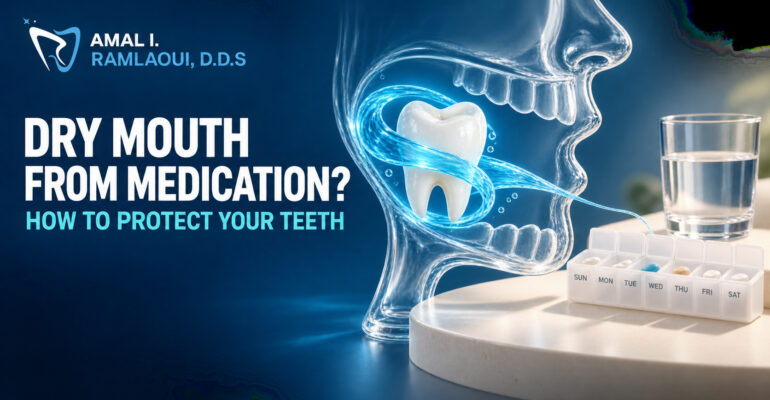
Dry Mouth From Medication: How to Protect Your Teeth
Dry mouth from medication happens when a medicine reduces saliva production or changes how moist your mouth feels. Because saliva helps wash away food, neutralize acids and protect tooth enamel, persistent dry mouth can increase the risk of cavities, irritation and oral infections.
Do not stop or change prescribed medication without speaking with the healthcare professional who prescribed it. Instead, tell your dentist, physician or pharmacist about the symptom so they can help you manage it safely.
At Ramlaoui DDS, we help patients understand how medications and health conditions may affect their teeth and gums. An examination can identify signs of increased cavity risk and determine whether additional preventive care may be appropriate.
Table of Contents
- What is medication-related dry mouth?
- Which medications may contribute to dry mouth?
- Why saliva matters
- How to protect your teeth
- Products and habits to reconsider
- When to arrange an evaluation
- How a dentist may help
- Frequently asked questions
What Is Medication-Related Dry Mouth?
Dry mouth, also called xerostomia, is a symptom rather than a disease. It can develop when your salivary glands produce less saliva or when a medication changes the sensation of moisture in your mouth.
Everyone experiences temporary dryness occasionally. Exercise, dehydration, stress, sleeping with an open mouth and talking for a long time can make the mouth feel dry.
However, dryness that repeatedly returns, interferes with eating or continues after drinking water deserves attention.
According to the National Institute of Dental and Craniofacial Research, hundreds of medicines can cause the salivary glands to produce less saliva.
Which Medications May Cause Dry Mouth?
Dry mouth from medication may be associated with certain medicines used for:
- Allergies and nasal congestion
- High blood pressure
- Anxiety or depression
- Pain
- Bladder-control conditions
- Muscle spasms
- Sleeping difficulties
- Asthma and other breathing conditions
- Neurologic conditions
Not everyone taking these medicines will develop dry mouth. The response may depend on the medication, dosage, timing, combination of medicines, hydration and existing health conditions.
The American Dental Association’s medication and oral-health guidance explains that dry mouth is a common medication side effect and that reduced saliva can leave teeth more vulnerable to decay.
Do not discontinue medication independently
If symptoms began after starting a medicine or changing its dosage, record when the dryness started and contact the medication prescriber.
A healthcare professional may review:
- Whether dry mouth is a known side effect
- The timing or dosage of the medicine
- Other medications or supplements
- Possible medical causes
- Safe options for managing the symptom
Your dentist can help address the oral-health effects, but decisions about prescribed medication should be made by the appropriate medical professional.
Why Is Saliva Important?
Saliva is one of the mouth’s natural defense systems. It helps:
- Wash away food particles
- Neutralize acids produced by oral bacteria
- Support chewing, speaking and swallowing
- Protect and lubricate oral tissues
- Carry minerals that help protect enamel
- Control some bacteria and fungi
- Improve the comfort of dentures and oral appliances
When saliva decreases, food debris, plaque and acids may remain in contact with teeth longer. This may increase the likelihood of cavities, particularly near the gumline, around restorations and on exposed tooth roots.
Dry mouth from medication does not guarantee tooth decay. It means that consistent, individualized prevention becomes more important.
Common Signs of Dry Mouth
Dry mouth may involve more than feeling thirsty. Possible signs include:
- A sticky, dry or burning sensation
- Thick or stringy saliva
- Cracked lips
- A rough or dry tongue
- Difficulty chewing or swallowing dry food
- Changes in taste
- Persistent bad breath
- Mouth sores
- Increased tooth sensitivity
- Dentures that feel less comfortable
- Cavities developing more frequently
Tell your dental team if you notice these changes, particularly after starting a new medication.
How to Protect Your Teeth From Dry Mouth From Medication
Sip plain water regularly
Keep water nearby and take small sips throughout the day. Water can temporarily moisten the mouth and help rinse away food particles.
Plain water is generally a better everyday choice than soda, sweetened tea, sports drinks, energy drinks or juice. Frequently sipping beverages containing sugar or acid can expose teeth to repeated acid challenges.
Water may improve comfort, but it may not restore normal saliva production.
Stimulate saliva safely when appropriate
Sugar-free gum may help stimulate saliva when the salivary glands can still respond. Consider products carrying the ADA Seal of Acceptance.
Chewing gum may not be appropriate for everyone, including people with jaw discomfort, swallowing difficulties, certain dentures, dietary restrictions or specific dental appliances.
Avoid managing dry mouth by continuously sucking on sugary candy. Repeated sugar exposure can increase cavity risk.
Brush with fluoride toothpaste
Brush twice daily for two minutes using fluoride toothpaste and a soft-bristled toothbrush.
Fluoride helps strengthen enamel and makes teeth more resistant to acids. This can be especially important when reduced saliva leaves teeth more vulnerable.
The NIDCR notes in its oral-hygiene guidance that a dentist may recommend professional fluoride treatment or an appropriate home fluoride product for people at increased risk of decay.
Do not begin using prescription-strength fluoride without professional guidance.
Clean between your teeth every day
A toothbrush cannot completely clean the tight spaces between teeth. Use floss or another interdental cleaner recommended by your dental team.
The most appropriate method depends on your tooth spacing, gum health, restorations, dental appliances, dexterity and personal comfort.
Reduce frequent sugar and acid exposure
How frequently teeth encounter sugar and acid can be as important as the total amount consumed.
Consider these habits:
- Keep sugary foods and drinks with meals.
- Drink plain water between meals.
- Avoid holding acidic drinks in your mouth.
- Check whether cough drops and breath mints contain sugar.
- Avoid using sweetened candy continuously to manage dryness.
- Rinse with water after acidic beverages.
Patients with medical dietary requirements should follow the guidance of their qualified healthcare professionals.
Reconsider products that aggravate dryness
Some people find that alcohol-containing mouthrinses make dryness more uncomfortable. Tobacco and nicotine products may also irritate oral tissues.
Caffeine and alcoholic beverages may contribute to a dry sensation in some individuals. Notice whether particular products make your symptoms worse.
A strong burning sensation does not mean a mouthwash is more effective. Ask your dentist whether you need a mouthrinse and which type is appropriate.
Bring an updated medication list to appointments
Your dental team needs an accurate health history. Bring a list containing:
- Prescription medications
- Over-the-counter medicines
- Vitamins
- Herbal products
- Supplements
- Recent dosage changes
Include medications used only occasionally, such as antihistamines, decongestants or sleep aids.
Can Dry Mouth Cause Cavities?
Dry mouth can increase cavity risk because less saliva is available to neutralize acids, clear food particles and support enamel protection.
Areas that may require closer monitoring include:
- Tooth roots exposed by gum recession
- Edges of crowns and fillings
- Areas around bridges or implants
- Spaces between teeth
- Teeth beneath partial dentures
- Deep grooves in back teeth
Early decay may not cause pain. Regular examinations allow a dentist to identify changes that may be difficult to see or feel at home.
Learn more about preventive care at Ramlaoui DDS.
When Should Dry Mouth Be Evaluated?
Arrange a dental or medical evaluation when dryness:
- Continues for several days or repeatedly returns
- Makes swallowing, eating or speaking difficult
- Interferes with sleep
- Causes persistent burning or soreness
- Is accompanied by white patches or mouth sores
- Makes dentures uncomfortable
- Begins after a medication change
- Appears alongside new sensitivity or cavities
- Does not improve with regular water intake
Dry mouth may have more than one cause. Possible contributors besides medication include dehydration, mouth breathing, diabetes, Sjögren’s disease, cancer treatment and salivary-gland conditions.
Seek urgent medical assistance for breathing difficulty, severe swelling, inability to swallow or signs of a serious allergic reaction.
How Can Ramlaoui DDS Help?
A dental examination can help determine how dry mouth is affecting your teeth, gums and oral tissues.
Depending on the findings, recommendations may include:
- Focused cavity monitoring
- Professional fluoride application
- An appropriate home fluoride product
- Oral-moisturizing products
- Dietary guidance
- Changes to oral-hygiene products
- Preventive visits based on clinical risk
- Evaluation of restorations or exposed roots
- Coordination with a physician or pharmacist
Not every patient needs every option. Recommendations should reflect the cause of the dryness, examination findings and individual cavity risk.
Patients can also learn more about professional teeth cleaning at Ramlaoui DDS.
Frequently Asked Questions
Can I stop taking medicine if it causes dry mouth?
No. Do not stop or alter prescribed medication without speaking with its prescriber. Tell your dentist and medical provider about the symptom so they can determine the safest response.
Will drinking more water cure medication-related dry mouth?
Water can temporarily improve comfort and rinse the mouth, but it may not restore normal saliva production. Persistent symptoms may require a broader prevention and management plan.
What toothpaste should I use for dry mouth?
Fluoride toothpaste is generally important because dry mouth may increase cavity risk. A dentist can recommend a product based on your enamel, sensitivity, restorations and overall cavity risk.
Can mouthwash help?
Some alcohol-free oral moisturizers may temporarily improve comfort. Therapeutic rinses may address cavities or another specific concern. Not every mouthwash is appropriate for every patient.
Why is my mouth especially dry at night?
Possible contributors include medication timing, mouth breathing, nasal congestion, reduced nighttime saliva flow and sleep-related breathing problems. Persistent nighttime symptoms should be evaluated.
Is dry mouth a normal part of aging?
Dry mouth is not considered an inevitable part of aging. Older adults may experience it more frequently because they are more likely to take multiple medications or have health conditions that affect saliva.
When should I see a dentist?
Arrange an appointment if dryness persists, disrupts eating or sleep, causes sores or burning, or appears alongside sensitivity, bad breath or new cavities.
Personalized Preventive Care From Ramlaoui DDS
Dry mouth from medication is common, but it should not be ignored. Practical home habits may improve comfort, while a dental examination can identify early changes and determine whether additional cavity protection is appropriate.
Ramlaoui DDS provides personalized preventive dental care for patients in San Jose and surrounding Bay Area communities.
📍 2025 Forest Ave., Suite 1A, San Jose, CA 95128
📅 Book an appointment online
☎️ Call: (408) 275-6430
📱 Text: (669) 259-8604

